
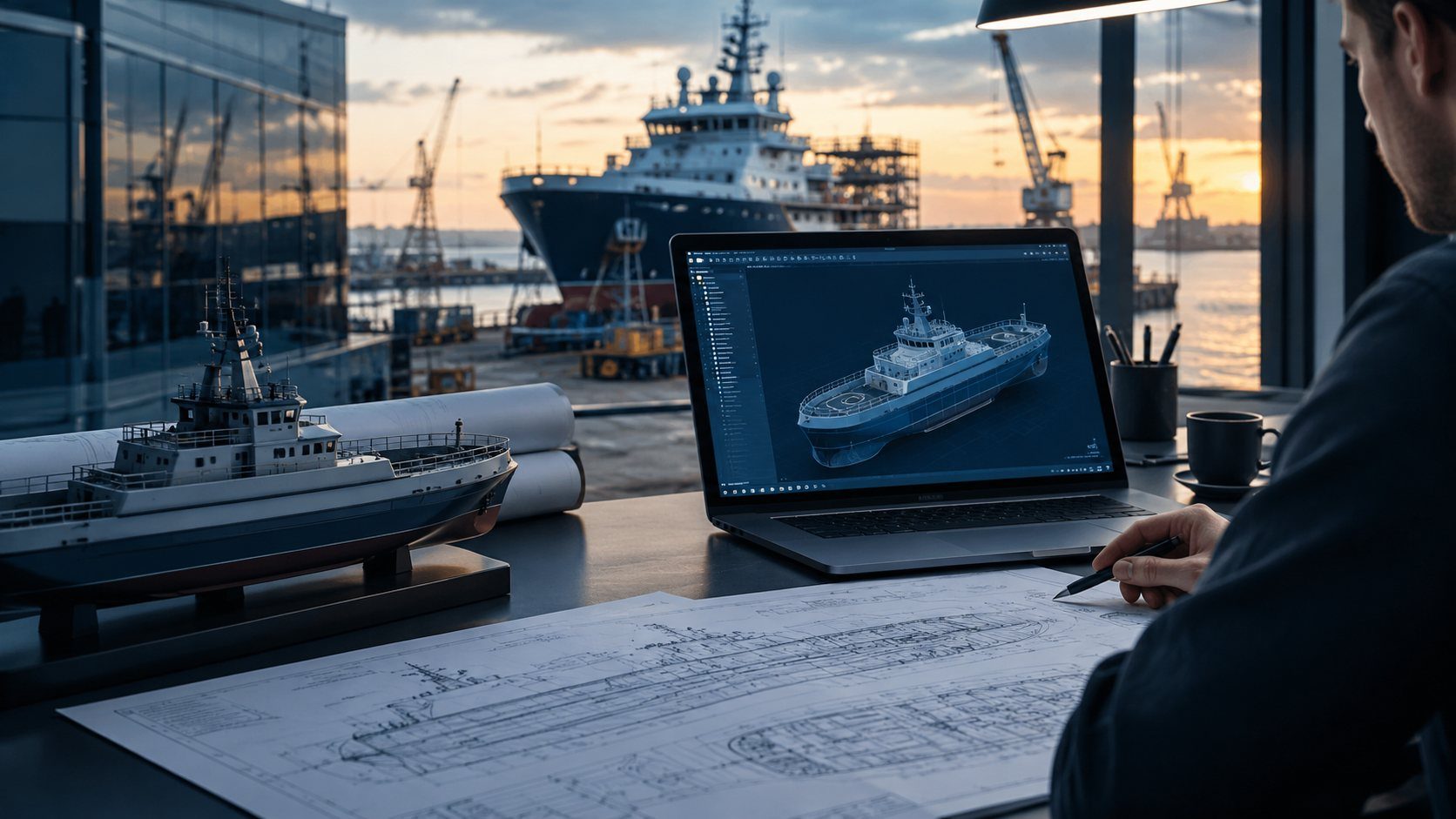
Maritime & Offshore Engineering

From concept to engineering detail.

Marine design and CAD engineering that turn operational requirements into coordinated, practical technical solutions.

Marine projects rarely start with a blank sheet. Existing vessel layouts, equipment interfaces, operating conditions and project schedules all influence what can be designed and installed. Capybara Dimensional supports shipowners, shipyards and engineering teams with 3D CAD modelling, mechanical design and detailed design development for maritime and offshore applications. Our focus is to produce information that other disciplines can review and use.

Whether the assignment concerns a single bracket, a mechanical assembly or equipment fitted into a crowded machinery space, we start by clarifying the intended function, available reference data and required output. We then develop the design to an agreed level of detail, identifying assumptions and interfaces that need confirmation. This helps reduce avoidable drawing revisions and makes engineering decisions easier to communicate.

View our capabilities
Marine engineering design and detailed CAD development
MARINE DESIGN & ENGINEERING
01 Design & Engineering
Our Capabilities

Engineering built around
the application.

From individual components to integrated machinery arrangements, each deliverable is developed for a defined purpose and for the people who will use it.

01

3D CAD Modelling

Build and refine 3D models of parts, equipment and assemblies in Autodesk Inventor, AutoCAD or SolidWorks, according to the project workflow. Models can capture overall geometry, interfaces, clearances and component relationships. Where useful, drawing views and parts information can be derived from the agreed model. The level of detail is tailored to concept review, design coordination or subsequent engineering—not inflated simply to make a visualisation look impressive.

02

Mechanical Design

Develop mechanical arrangements that account for fit, motion, accessibility and surrounding equipment. Typical design considerations include mounting positions, connection points, installation envelopes and maintenance access. We can evaluate design alternatives and document decisions for review, using the dimensions and technical requirements supplied by the client. Calculations or formal verification are defined separately whenever the project requires them.

03

Equipment Integration

Position new or modified equipment within vessel spaces while checking its relationship to structures, pipework and neighbouring systems. Using available reference models, drawings or measured information, we can highlight potential interface conflicts early and prepare layouts that support coordination with other disciplines. Interface dimensions that depend on site conditions are identified for confirmation before installation planning proceeds.

04

Design Development

Progress sketches, reference drawings and preliminary models into consistent engineering information. This may involve revising existing designs, building missing geometry or preparing views that explain how a proposed arrangement fits together. We work with documented revisions and clear file structures so that design changes can be reviewed and transferred to the next project stage without losing their context.

Our Approach

Designed for the realities
of the marine environment.

A workable marine design begins with clear inputs. Before detailed modelling, we establish what must fit, move, connect or remain accessible. We consider the available vessel documentation, the expected operating environment, surrounding disciplines and the intended use of each deliverable. Missing information is flagged rather than silently assumed. This is particularly important when working with older drawings or modifying existing installations.

During development, models and drawings are checked for consistency and revised against agreed feedback. Deliverables can include editable CAD files, general-arrangement drawings, detail views or other documentation defined in the scope. Any classification, statutory approval or specialist verification required for the final design remains subject to the project's appointed responsible parties. The result is an organised engineering handover rather than a collection of disconnected files.

01

Technical accuracy

Key dimensions, interfaces and assumptions are made clear for review.

02

Practical application

Access, installation space and operational constraints inform the design.

03

Clear deliverables

Models, drawings and revisions are organised for the next project stage.

Working Together

Defined inputs. Useful engineering outputs.

A clear scope helps avoid unnecessary work. We agree on available source information, required accuracy, review milestones and file formats before development starts. If a project uses client naming conventions, title blocks or revision procedures, those requirements can be incorporated into the drawing package.

Projects may begin with 2D plans, existing CAD assemblies, photographs or site measurements. The suitability of each source is assessed before detailed modelling, and information that cannot be verified from the supplied material is identified for follow-up. This gives project teams a practical basis for planning and decision-making.

For a productive first discussion, it helps to share the equipment purpose, approximate dimensions, relevant arrangement drawings, known connection points and your preferred review format. Even if not all information is available, we can identify which references matter most. The objective is to establish a practical engineering task with a defined output and an achievable review process—not to add complexity before the project needs it.

Planning a marine design project?

Let's discuss your
engineering requirements.

Share your design objective, available drawings and preferred CAD format. We can discuss a focused modelling task or support for a larger engineering package, including what information is required to begin and which deliverables will be useful to your team.

Discuss your project